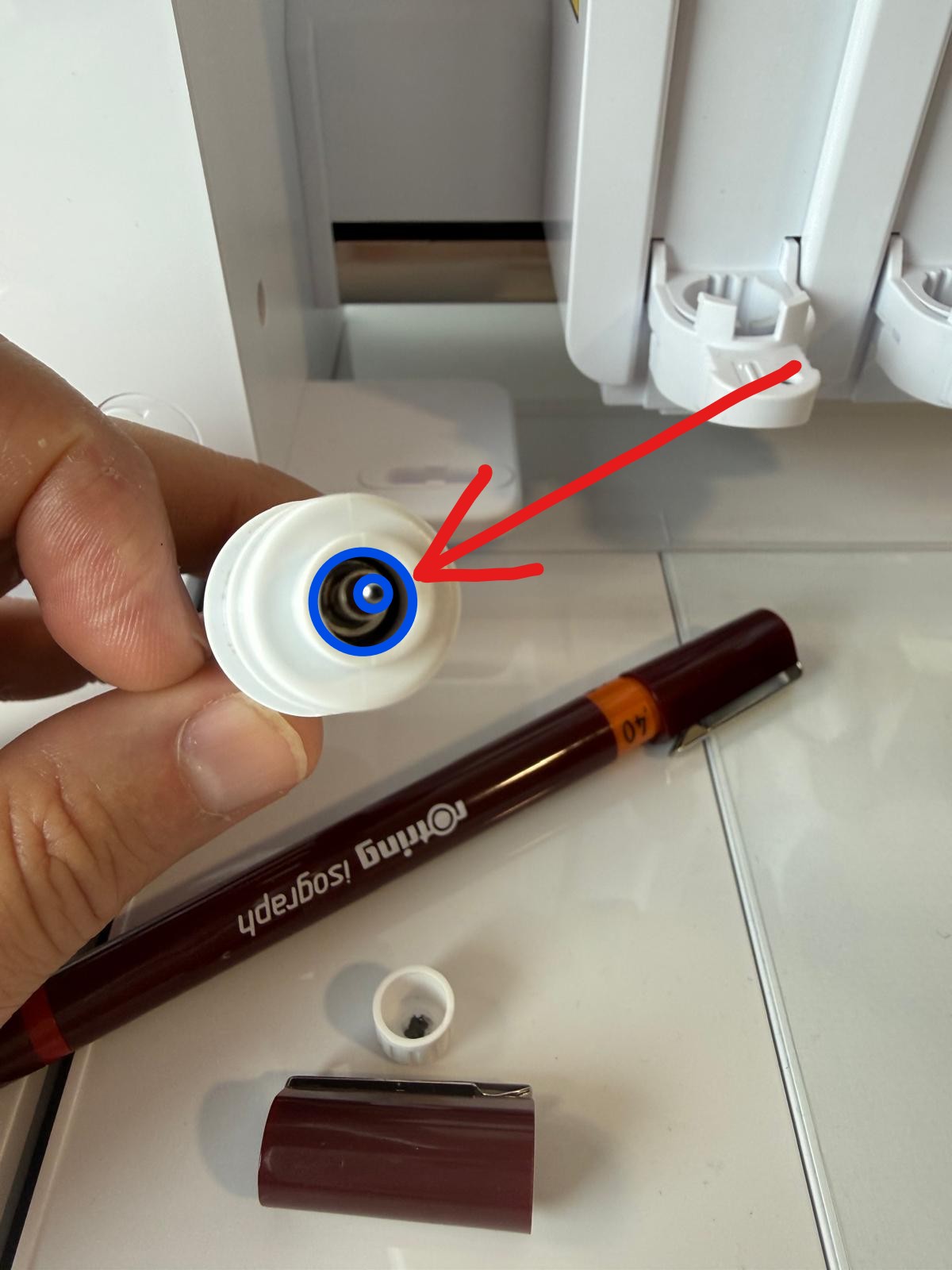
I’ve been experimenting with different technical pens on a Silhouette Curio 2, and one issue has become much more important than I expected: how securely and concentrically the pen is held.
My first tests were with Staedtler Pigment Liners in different nib sizes. They fit in the Silhouette pen holder, but not perfectly. There is a small amount of play near the lower part of the holder, which means the tip can sit slightly off-centre.
For a single drawing, that may not seem particularly serious. The problem becomes much more obvious when changing pens during the same plot.
If 0.1 mm, 0.3 mm and 0.5 mm pens do not all sit on exactly the same axis, each pen change can introduce a small positional shift. On architectural drawings with closely aligned linework, even a very small displacement becomes visible.
I started looking at a few possible solutions:
- small rubber bushings or O-rings inside the holder;
- a custom sleeve with the pen centred through a precisely sized hole;
- making different inserts for different pen diameters;
- using a more rigid technical pen whose body fits the holder more consistently.
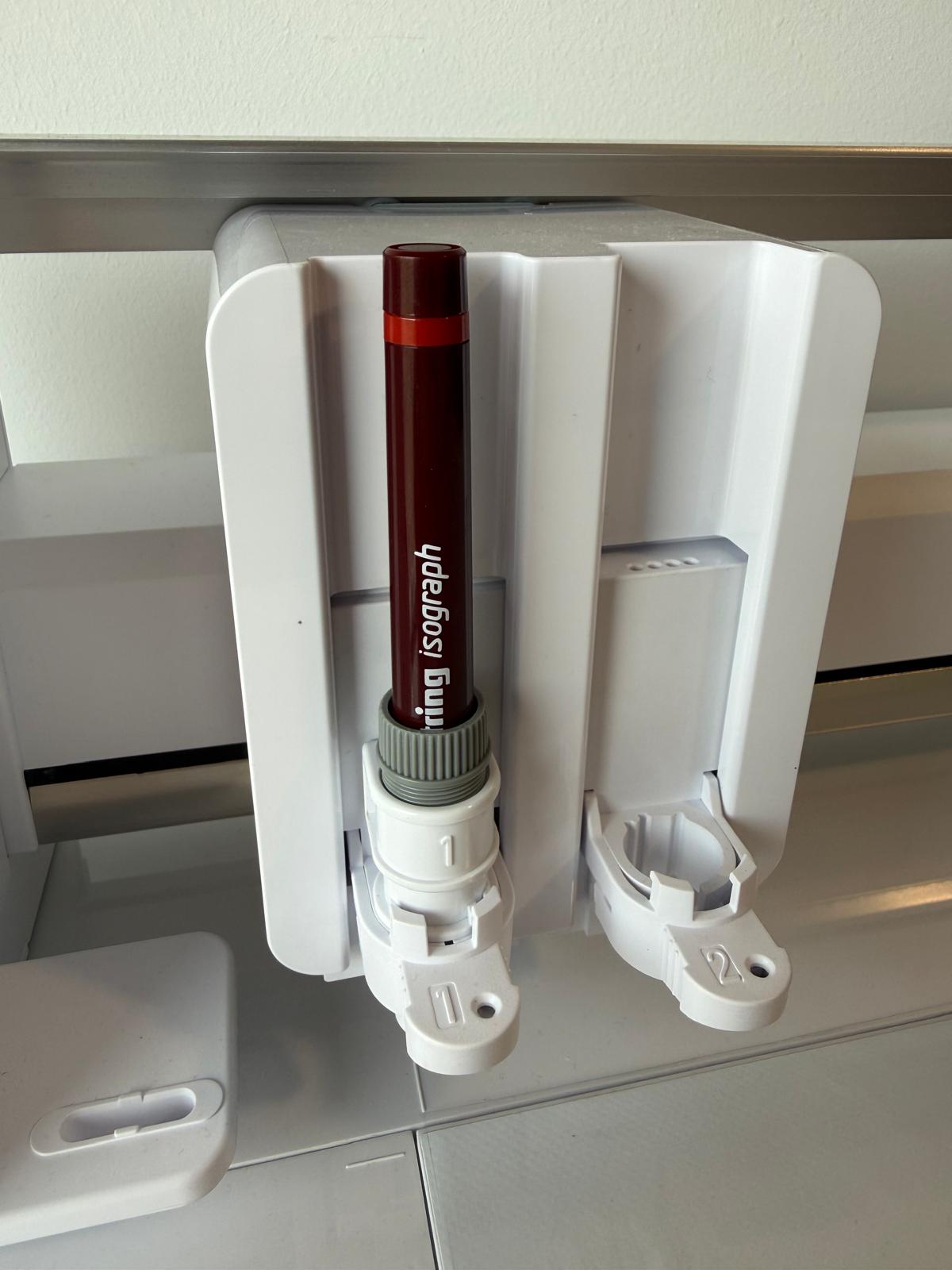
More recently I started testing some old rOtring Isograph technical pens. My 0.20 mm, 0.40 mm and 0.80 mm pens fit the Silhouette adapter and work surprisingly well, and I’m using their old pre-filled cartridges as refillable ink reservoirs.
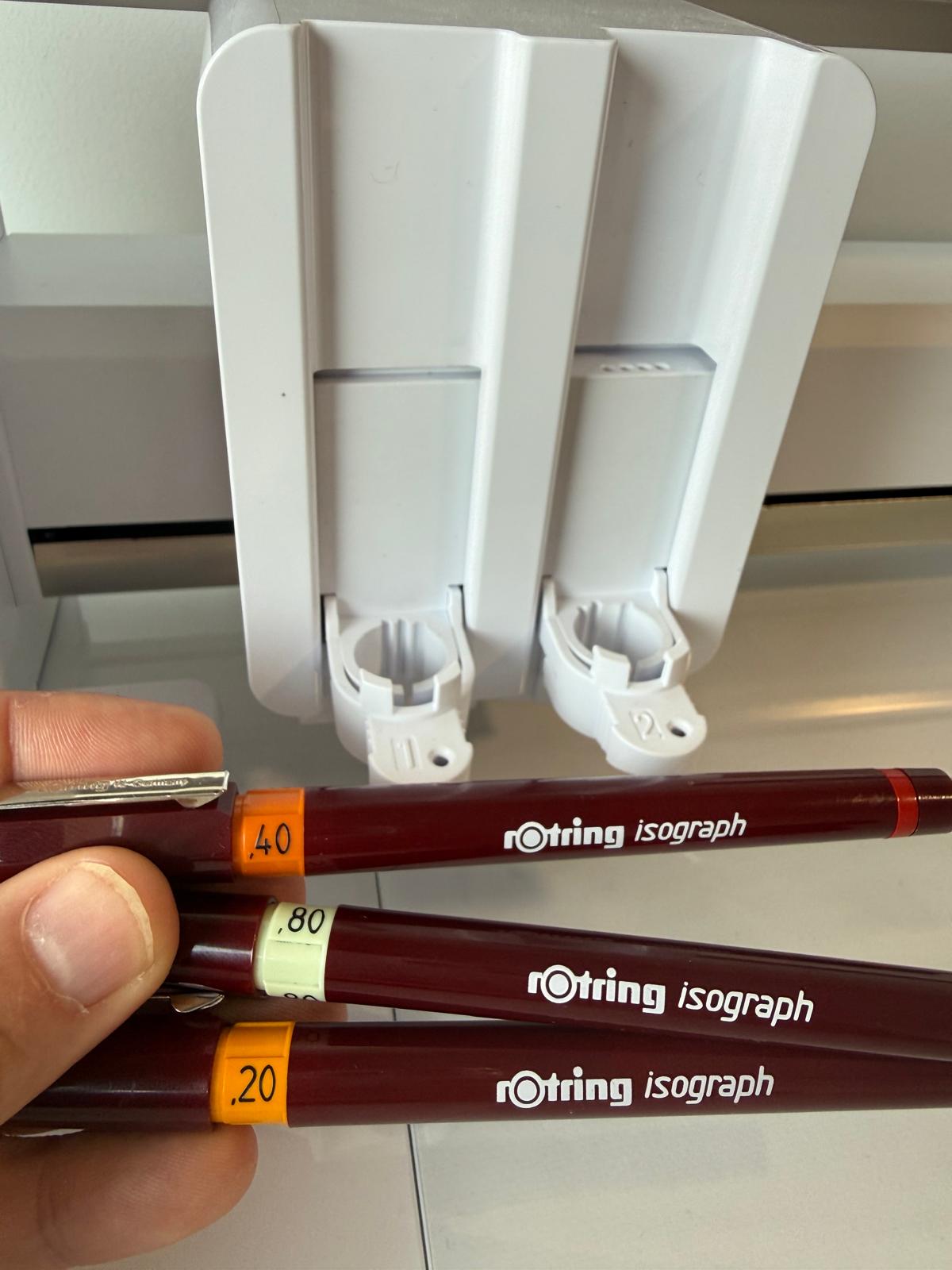
That has made me think that the pen holder itself is almost as important as the pen.
Ideally, I would want three things from any adapter:
- the pen axis to remain perfectly centred;
- the insertion depth to be repeatable every time;
- different pens to return to the same XY position after a tool change.
I’m curious how other people solve this.
Do you rely on the standard holder supplied with your plotter, use commercial adapters, or make your own inserts or bushings?
And if you use several pen sizes in the same drawing, how do you make sure a pen change doesn’t introduce an offset?