¿Siguen valiendo la pena los estilógrafos técnicos antiguos para dibujar con plotter?

Hace poco empecé a usar unos antiguos estilógrafos técnicos rOtring Isograph con una Silhouette Curio 2, y han resultado ser mucho más prácticos de lo que esperaba.

Actualmente tengo unos Isograph de 0,20 mm, 0,40 mm y 0,80 mm que funcionan de forma fiable en el portaplumas de Silhouette (también tengo varios de otros tamaños que todavía debo intentar volver a poner en servicio, ya que estuvieron almacenados durante muchos años con tinta en las puntas y esta se ha secado en su interior).
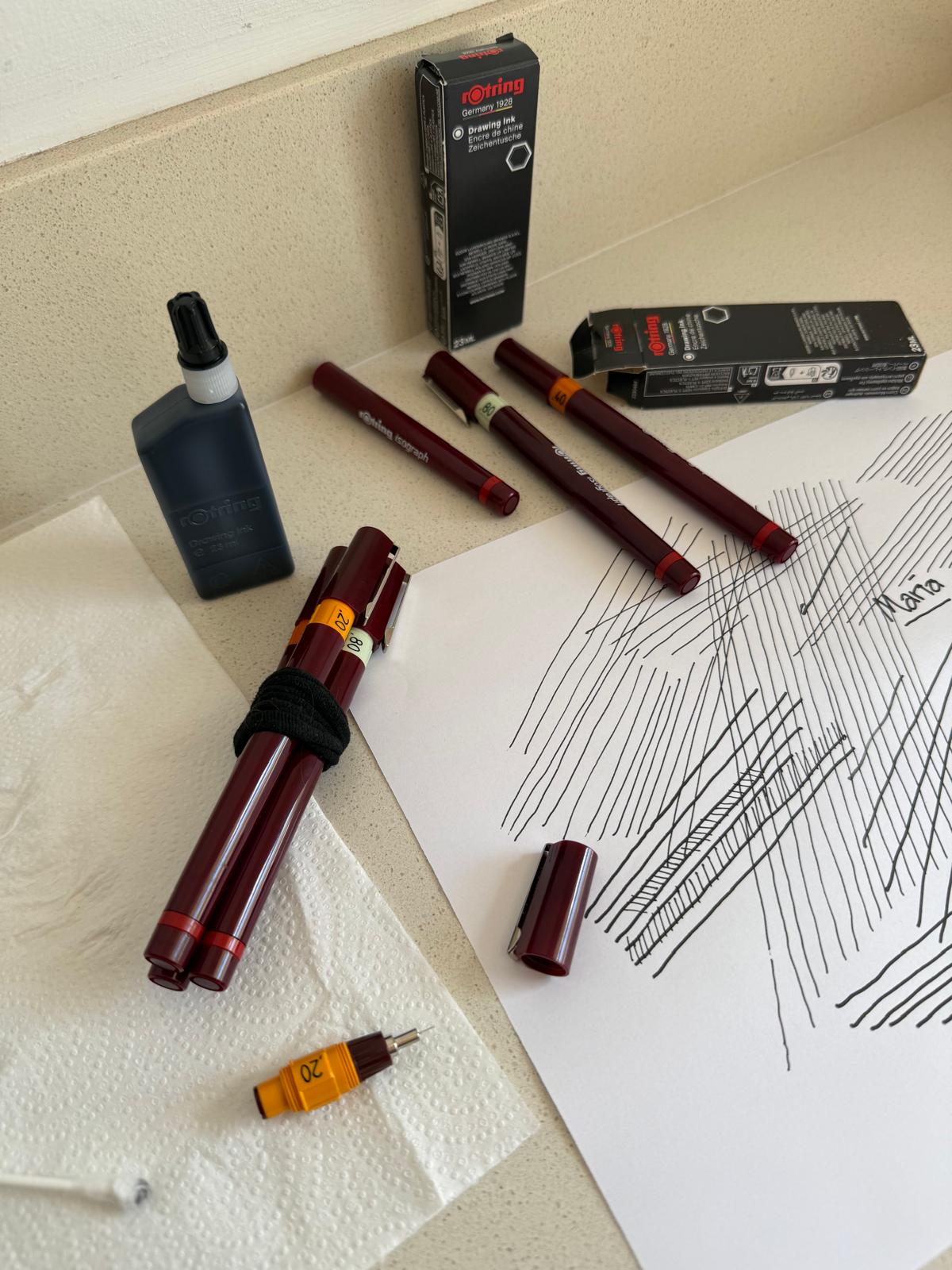
Lo que más me sorprendió es que los antiguos cartuchos precargados todavía pueden resultar útiles. En lugar de tratarlos como cartuchos desechables, los estoy reutilizando como pequeños depósitos de tinta rellenables.
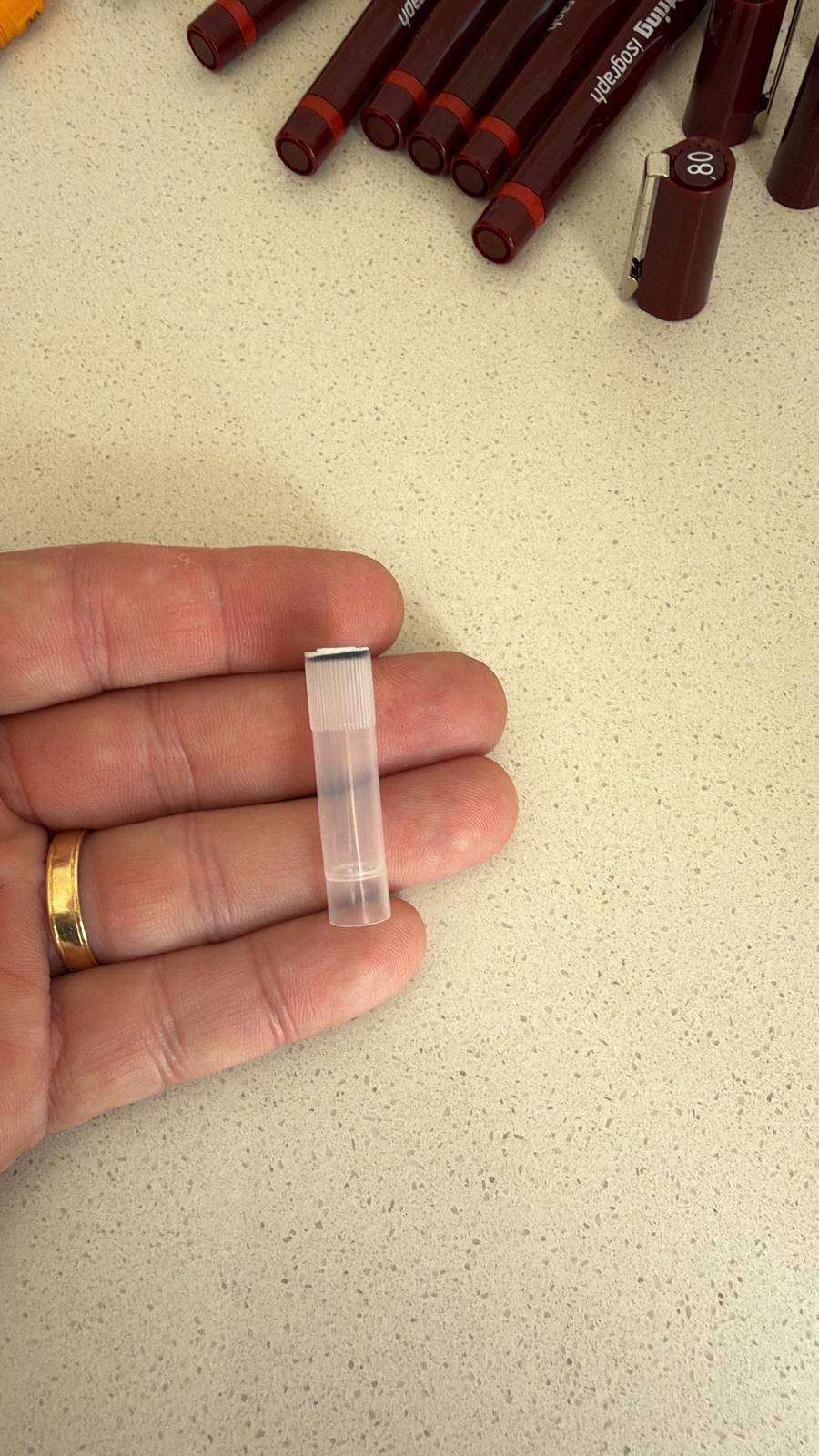
Para el trazado con plóter, esto ofrece varias ventajas:

  • los estilógrafos pueden funcionar durante mucho tiempo sin necesidad de rellenarlos constantemente;
  • se pueden preparar con antelación puntas de distintos tamaños;
  • el cuerpo del estilógrafo es rígido y uniforme;
  • la geometría de la punta es mucho más precisa que la de muchos rotuladores calibrados convencionales.

También hay inconvenientes evidentes.

Los estilógrafos técnicos requieren más mantenimiento, especialmente si se dejan sin usar con tinta en su interior. Las puntas muy finas pueden obstruirse, y no todas las tintas funcionan bien con ellos. Además, son menos tolerantes que los rotuladores de tinta pigmentada desechables.

Pero para el dibujo lineal arquitectónico y los trazados en los que el grosor de línea es importante, empiezo a pensar que esta antigua tecnología sigue siendo extremadamente relevante.

Me interesa especialmente saber si otras personas utilizan estilógrafos técnicos como rOtring Isograph, Rapidograph, STAEDTLER Mars matic, Koh-I-Noor u otros similares en plóteres de pluma modernos. Tengo especial debilidad por los estilógrafos Mars matic, ya que fueron los que utilizaba cuando estudiaba arquitectura.

¿Utilizáis los sistemas de tinta originales, cartuchos modificados, depósitos rellenables o alguna otra cosa?

Y para sesiones largas de trazado, ¿habéis encontrado alguna tinta que siga funcionando de forma fiable sin secarse ni obstruir la punta?

Old technical pens can be a very good match for plotters when consistent line width matters. The main challenge is usually not the pen holder, but keeping the ink system wet and properly vented during a long plot.

A few practices that may help:

  • Use ink intended for technical pens first. Manufacturer technical-pen ink is generally the safest starting point. India ink, acrylic ink, and highly pigmented drawing inks can work in some systems, but their solids make clogging more likely—especially in 0.20 mm nibs.
  • Check the reservoir vent. A reused cartridge needs to admit air as ink leaves. If the vent is blocked or the refill seals it, the pen may start strongly and then fade or stop.
  • Avoid overfilling. Leaving a small air space makes it easier for the reservoir to equalize pressure and reduces leakage when the pen is moved.
  • Run a short test plot first. A page of parallel lines and a few starts/stops can reveal skipping, pooling, or a gradual reduction in line density before committing to a long job.
  • Clean immediately after plotting. Flush the nib and feed with the manufacturer’s cleaning solution or suitable water, depending on the ink. Dried ink is much harder to remove than wet ink.
  • For neglected nibs, soak before disassembly. A prolonged soak and gentle flushing are less risky than pushing wire through a fine tube. An ultrasonic cleaner may help with removable parts, but I would treat the complete pen cautiously unless the manufacturer explicitly permits it.
  • Keep prepared pens capped and horizontal only if the manufacturer’s instructions support that orientation. Otherwise, storage position can affect whether ink reaches the nib or leaks into the feed.

For a long plot, I would also compare the beginning and end of the job for line-weight drift. A pen that remains visually consistent over ten minutes may still show a gradual change over an hour because of evaporation at the nib, reservoir pressure, or sedimentation.

The most useful record would probably be a small table containing:

pen size | ink | reservoir type | plot duration | speed/force | paper | result

That could reveal whether the reliable combination is primarily the nib, the ink, or the modified cartridge. Your 0.20 mm result would be especially interesting, since that size should expose drying and particle-size problems sooner than the 0.40 mm and 0.80 mm pens.