As canetas técnicas antigas ainda valem a pena para pen plotting?

Recentemente comecei a usar algumas canetas técnicas rOtring Isograph antigas com uma Silhouette Curio 2, e elas acabaram sendo muito mais práticas do que eu esperava.

Atualmente tenho Isographs de 0,20 mm, 0,40 mm e 0,80 mm funcionando de forma confiável no suporte de caneta da Silhouette (também tenho vários outros tamanhos que ainda preciso tentar recuperar, pois ficaram guardados por muitos anos com tinta nas pontas, que acabou secando dentro delas).
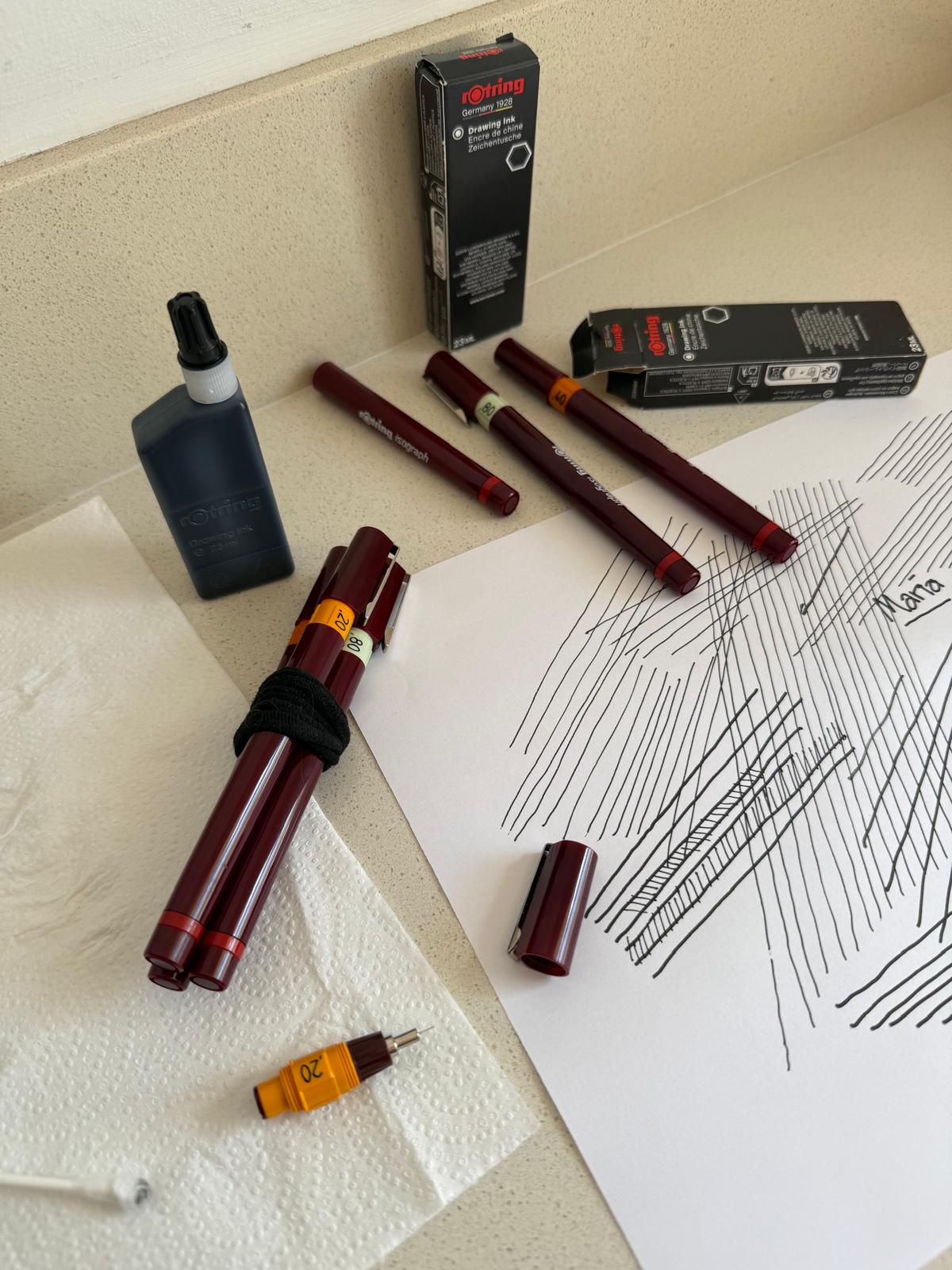
O que mais me surpreendeu é que os antigos cartuchos pré-cheios ainda podem ser úteis. Em vez de tratá-los como cartuchos descartáveis, estou reutilizando-os como pequenos reservatórios de tinta recarregáveis.
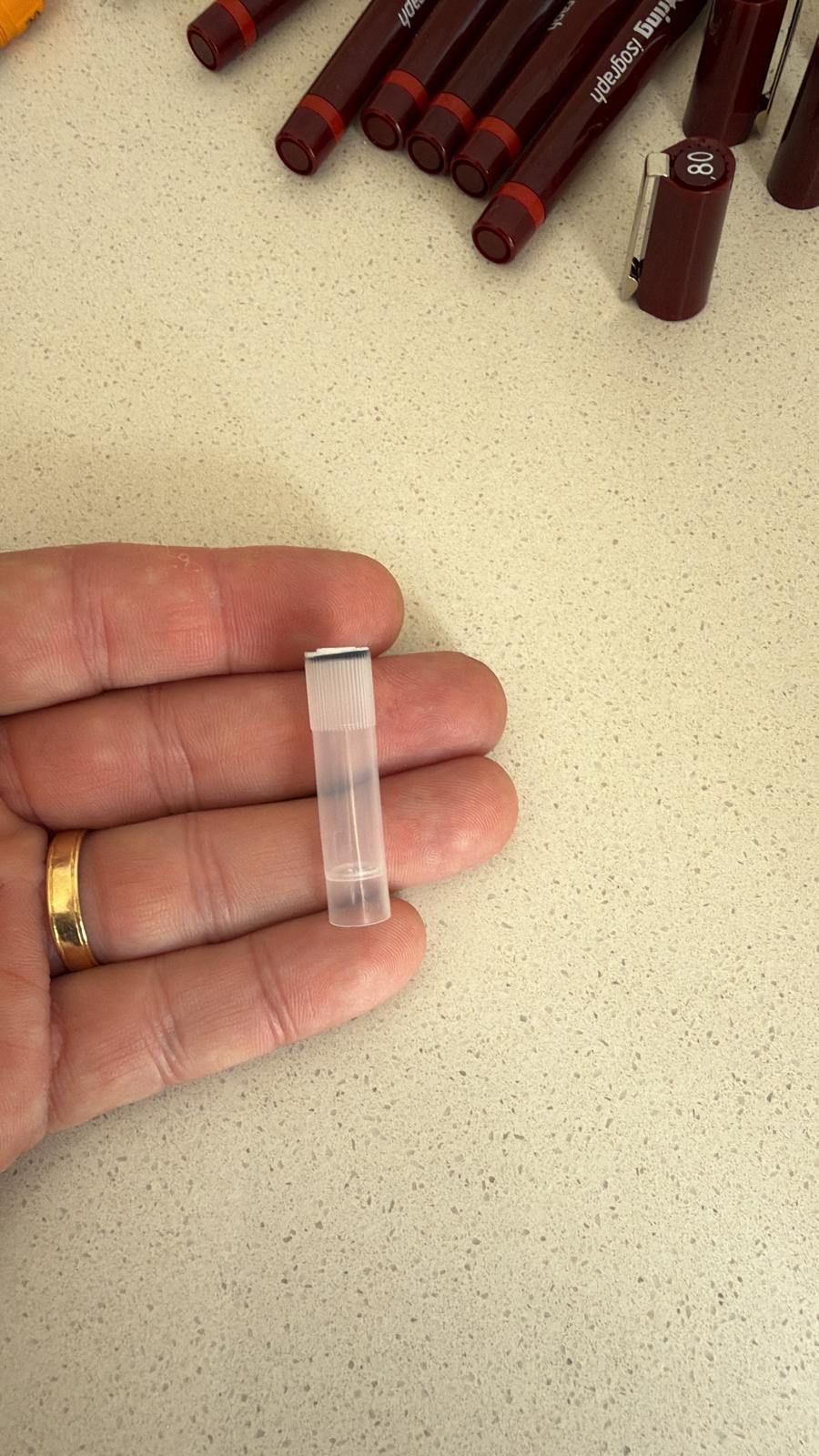
Para pen plotting, isso traz algumas vantagens:

  • as canetas podem funcionar por bastante tempo sem precisar ser recarregadas constantemente;
  • diferentes tamanhos de ponta podem ser preparados com antecedência;
  • o corpo da caneta é rígido e consistente;
  • a geometria da ponta é muito mais precisa do que a de muitas canetas comuns de ponta fina.

Também há desvantagens óbvias.

Canetas técnicas exigem mais manutenção, especialmente se forem deixadas sem uso com tinta dentro. Pontas muito finas podem entupir, e nem toda tinta se comporta bem nelas. Elas também são menos tolerantes do que as canetas descartáveis de tinta pigmentada.

Mas, para desenhos arquitetônicos lineares e plotagens em que a espessura da linha é importante, estou começando a achar que essa tecnologia antiga ainda é extremamente relevante.

Tenho particular interesse em saber se outras pessoas estão usando canetas técnicas como rOtring Isograph, Rapidograph, STAEDTLER Mars matic, Koh-I-Noor ou similares em pen plotters modernos. Tenho um carinho especial pelas canetas Mars matic, pois foram as canetas técnicas que usei quando estudava arquitetura.

Vocês usam os sistemas de tinta originais, cartuchos modificados, reservatórios recarregáveis ou alguma outra coisa?

E, para sessões longas de plotagem, encontraram alguma tinta que continue confiável sem secar ou entupir a ponta?

Old technical pens can be a very good match for plotters when consistent line width matters. The main challenge is usually not the pen holder, but keeping the ink system wet and properly vented during a long plot.

A few practices that may help:

  • Use ink intended for technical pens first. Manufacturer technical-pen ink is generally the safest starting point. India ink, acrylic ink, and highly pigmented drawing inks can work in some systems, but their solids make clogging more likely—especially in 0.20 mm nibs.
  • Check the reservoir vent. A reused cartridge needs to admit air as ink leaves. If the vent is blocked or the refill seals it, the pen may start strongly and then fade or stop.
  • Avoid overfilling. Leaving a small air space makes it easier for the reservoir to equalize pressure and reduces leakage when the pen is moved.
  • Run a short test plot first. A page of parallel lines and a few starts/stops can reveal skipping, pooling, or a gradual reduction in line density before committing to a long job.
  • Clean immediately after plotting. Flush the nib and feed with the manufacturer’s cleaning solution or suitable water, depending on the ink. Dried ink is much harder to remove than wet ink.
  • For neglected nibs, soak before disassembly. A prolonged soak and gentle flushing are less risky than pushing wire through a fine tube. An ultrasonic cleaner may help with removable parts, but I would treat the complete pen cautiously unless the manufacturer explicitly permits it.
  • Keep prepared pens capped and horizontal only if the manufacturer’s instructions support that orientation. Otherwise, storage position can affect whether ink reaches the nib or leaks into the feed.

For a long plot, I would also compare the beginning and end of the job for line-weight drift. A pen that remains visually consistent over ten minutes may still show a gradual change over an hour because of evaporation at the nib, reservoir pressure, or sedimentation.

The most useful record would probably be a small table containing:

pen size | ink | reservoir type | plot duration | speed/force | paper | result

That could reveal whether the reliable combination is primarily the nib, the ink, or the modified cartridge. Your 0.20 mm result would be especially interesting, since that size should expose drying and particle-size problems sooner than the 0.40 mm and 0.80 mm pens.