Are old technical pens still worth using for pen plotting?

I’ve recently started using some old rOtring Isograph technical pens with a Silhouette Curio 2, and they have turned out to be much more practical than I expected.

I currently have 0.20 mm, 0.40 mm and 0.80 mm Isographs working reliably in the Silhouette pen holder (I also have several other sizes that I still need to try to bring back into service, as they were stored many years ago with ink left in the nibs and the ink has since dried inside them).
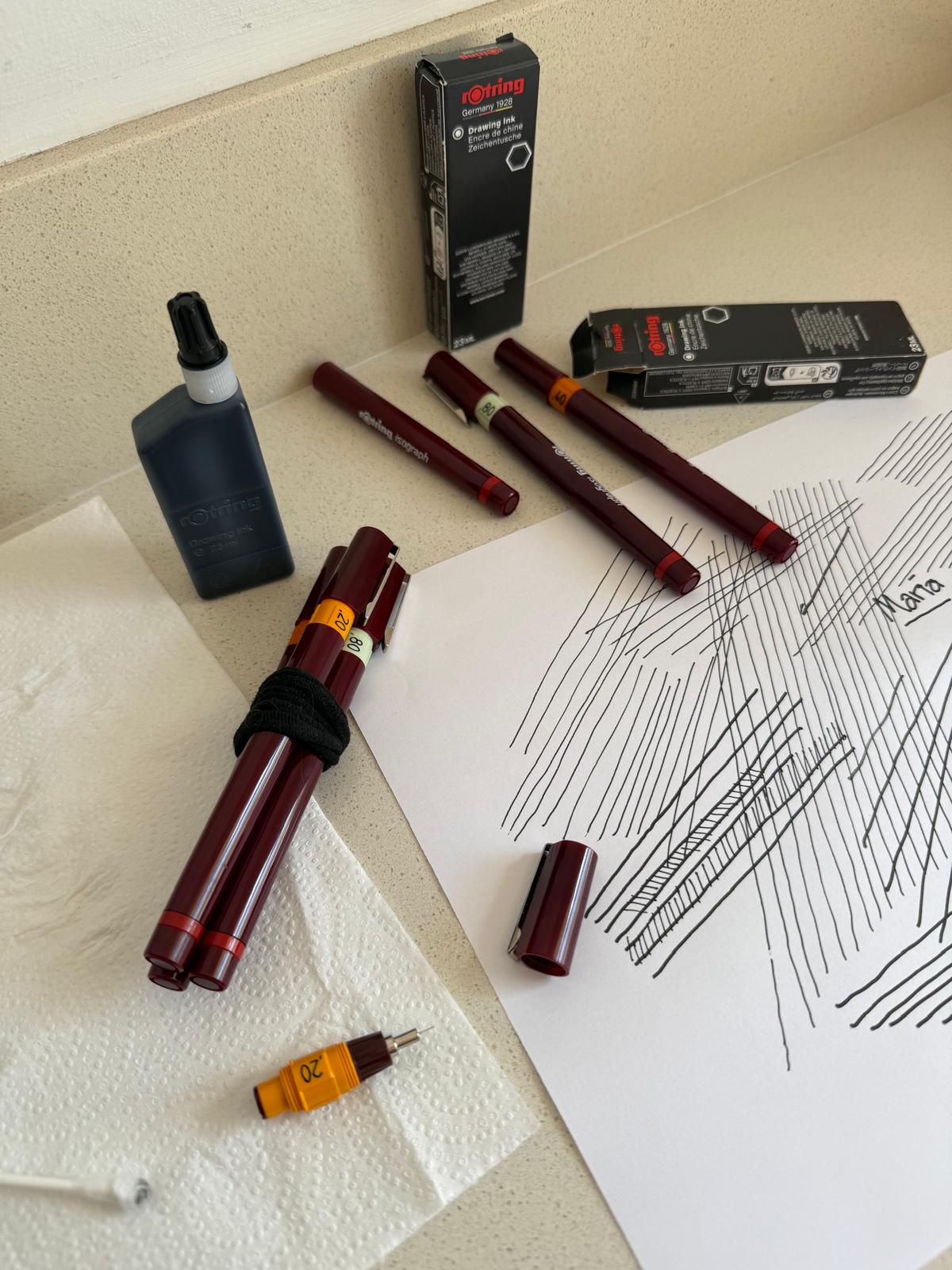
What surprised me most is that the old pre-filled cartridges can still be useful. Instead of treating them as disposable cartridges, I’m reusing them as small refillable ink reservoirs.
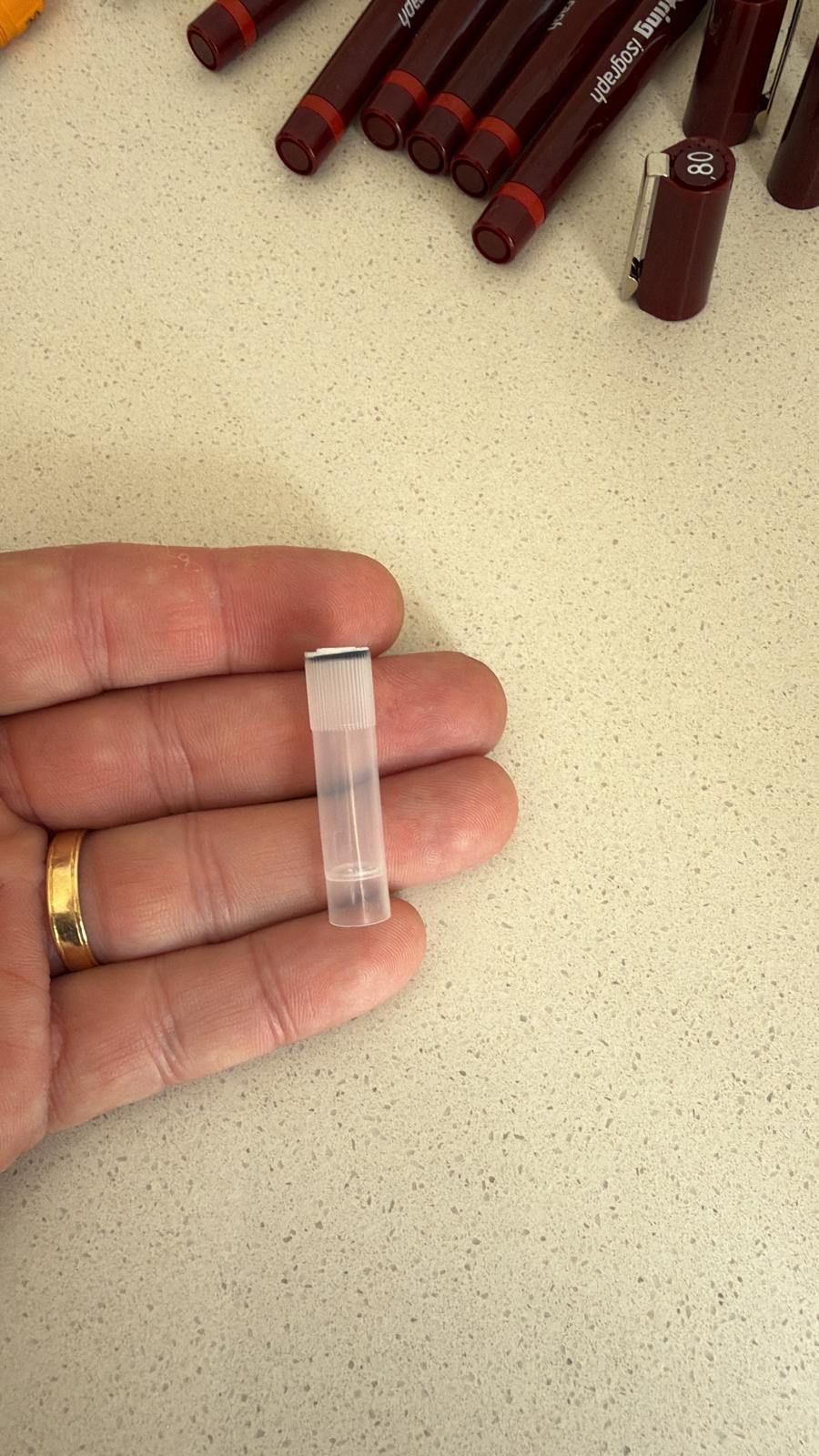
For pen plotting, that has a few advantages:

  • the pens can run for a long time without needing to be refilled constantly;
  • different nib sizes can be prepared in advance;
  • the body of the pen is rigid and consistent;
  • the tip geometry is much more precise than with many ordinary fineliners.

There are also obvious drawbacks.

Technical pens need more maintenance, especially if they are left unused with ink inside. Very fine nibs can clog, and not every ink behaves well in them. They are also less forgiving than disposable pigment liners.

But for architectural linework and plots where line weight matters, I’m beginning to think that this old technology is still extremely relevant.

I’m particularly interested in whether other people are using technical pens such as rOtring Isograph, Rapidograph, STAEDTLER Mars matic, Koh-I-Noor, or similar pens on modern pen plotters. I have a particular soft spot for the Mars matic pens, as those were the technical pens I used when I was studying architecture.

Are you using the original ink systems, modified cartridges, refillable reservoirs or something else?

And for long plotting sessions, have you found any inks that remain reliable without drying or clogging the nib?

Old technical pens can be a very good match for plotters when consistent line width matters. The main challenge is usually not the pen holder, but keeping the ink system wet and properly vented during a long plot.

A few practices that may help:

  • Use ink intended for technical pens first. Manufacturer technical-pen ink is generally the safest starting point. India ink, acrylic ink, and highly pigmented drawing inks can work in some systems, but their solids make clogging more likely—especially in 0.20 mm nibs.
  • Check the reservoir vent. A reused cartridge needs to admit air as ink leaves. If the vent is blocked or the refill seals it, the pen may start strongly and then fade or stop.
  • Avoid overfilling. Leaving a small air space makes it easier for the reservoir to equalize pressure and reduces leakage when the pen is moved.
  • Run a short test plot first. A page of parallel lines and a few starts/stops can reveal skipping, pooling, or a gradual reduction in line density before committing to a long job.
  • Clean immediately after plotting. Flush the nib and feed with the manufacturer’s cleaning solution or suitable water, depending on the ink. Dried ink is much harder to remove than wet ink.
  • For neglected nibs, soak before disassembly. A prolonged soak and gentle flushing are less risky than pushing wire through a fine tube. An ultrasonic cleaner may help with removable parts, but I would treat the complete pen cautiously unless the manufacturer explicitly permits it.
  • Keep prepared pens capped and horizontal only if the manufacturer’s instructions support that orientation. Otherwise, storage position can affect whether ink reaches the nib or leaks into the feed.

For a long plot, I would also compare the beginning and end of the job for line-weight drift. A pen that remains visually consistent over ten minutes may still show a gradual change over an hour because of evaporation at the nib, reservoir pressure, or sedimentation.

The most useful record would probably be a small table containing:

pen size | ink | reservoir type | plot duration | speed/force | paper | result

That could reveal whether the reliable combination is primarily the nib, the ink, or the modified cartridge. Your 0.20 mm result would be especially interesting, since that size should expose drying and particle-size problems sooner than the 0.40 mm and 0.80 mm pens.