I’ve recently started using some old rOtring Isograph technical pens with a Silhouette Curio 2, and they have turned out to be much more practical than I expected.
I currently have 0.20 mm, 0.40 mm and 0.80 mm Isographs working reliably in the Silhouette pen holder (I also have several other sizes that I still need to try to bring back into service, as they were stored many years ago with ink left in the nibs and the ink has since dried inside them).
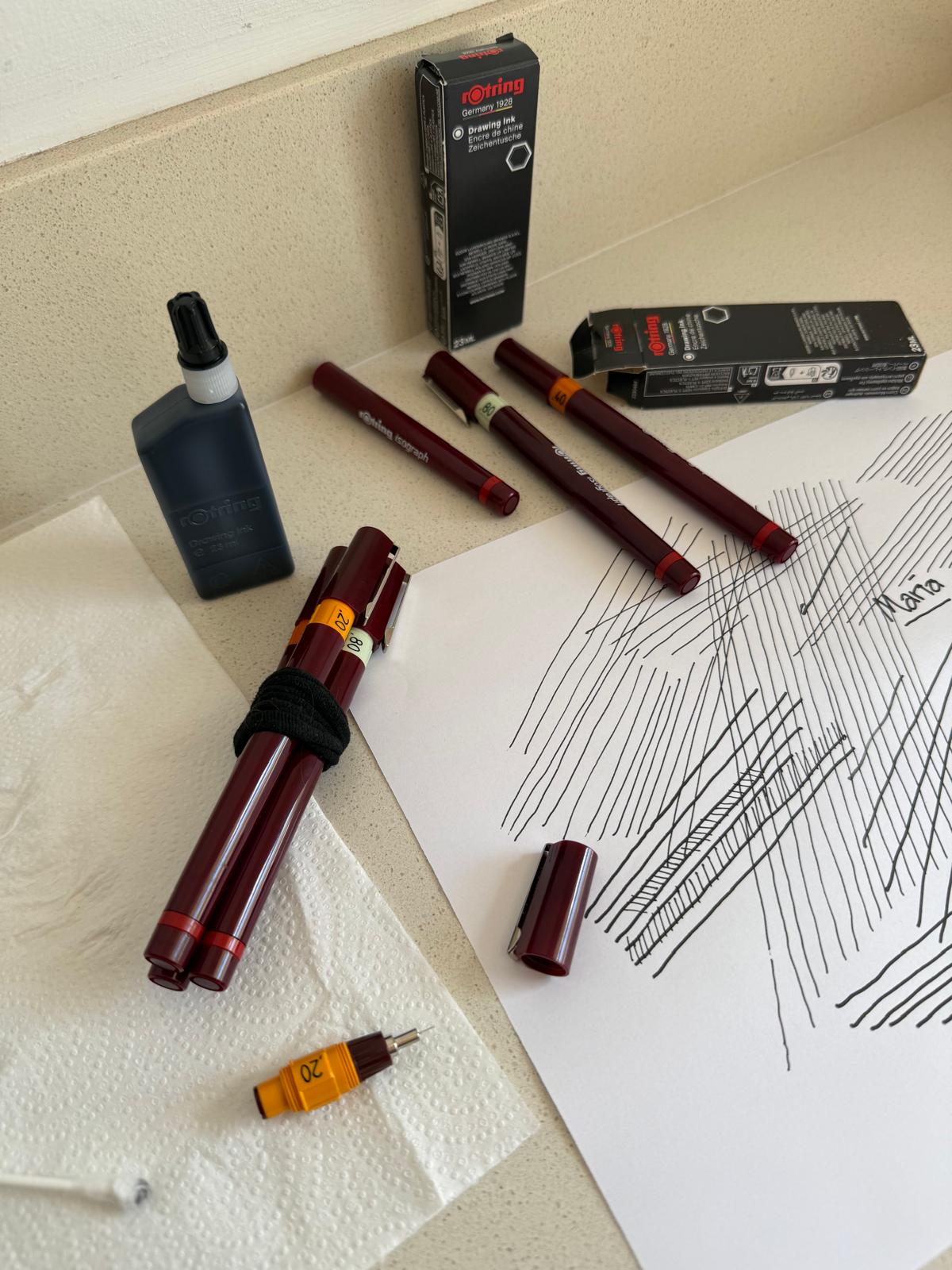
What surprised me most is that the old pre-filled cartridges can still be useful. Instead of treating them as disposable cartridges, I’m reusing them as small refillable ink reservoirs.
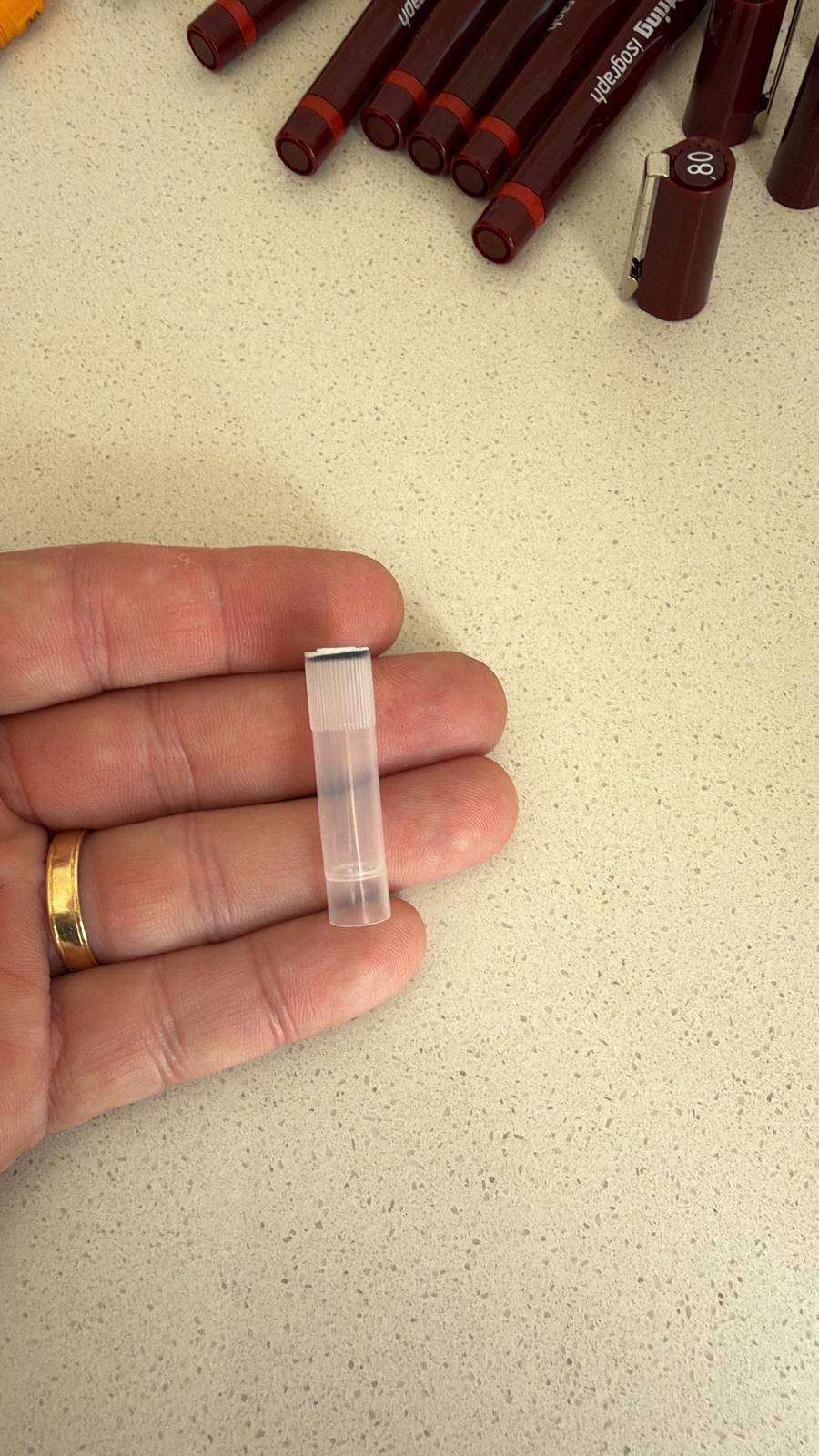
For pen plotting, that has a few advantages:
- the pens can run for a long time without needing to be refilled constantly;
- different nib sizes can be prepared in advance;
- the body of the pen is rigid and consistent;
- the tip geometry is much more precise than with many ordinary fineliners.
There are also obvious drawbacks.
Technical pens need more maintenance, especially if they are left unused with ink inside. Very fine nibs can clog, and not every ink behaves well in them. They are also less forgiving than disposable pigment liners.
But for architectural linework and plots where line weight matters, I’m beginning to think that this old technology is still extremely relevant.
I’m particularly interested in whether other people are using technical pens such as rOtring Isograph, Rapidograph, STAEDTLER Mars matic, Koh-I-Noor, or similar pens on modern pen plotters. I have a particular soft spot for the Mars matic pens, as those were the technical pens I used when I was studying architecture.
Are you using the original ink systems, modified cartridges, refillable reservoirs or something else?
And for long plotting sessions, have you found any inks that remain reliable without drying or clogging the nib?